Our story

The gap after
the biggest size.

Diapers for Youth started with an observation that turned into a product principle: the older a child gets, the worse the options get, and pull ups, which are the obvious answer, leak.

6
youth sizes
1
tab per side
20
diapers per pack

Why we started.

Once a child outgrows Size 8, the shelf designed for them is empty. Parents are left with two bad options: an adult product cut for a grown adult, or a pull up built to look like underwear. The adult product doesn't fit a child's proportions. The pull up doesn't hold.

The reasons a family gets here are almost never dramatic. A child who trained years ago and has been waking up wet again. A family planning a two day drive. A first attempt at potty training that everyone agreed to pause. A child who simply sleeps better in a diaper. Sometimes a medical or continence issue, but far more often, a practical call about making the week work.

None of those families need to be talked into anything. They need a product that fits, holds and doesn't embarrass a ten year old. That's the entire brief.

Share your situation
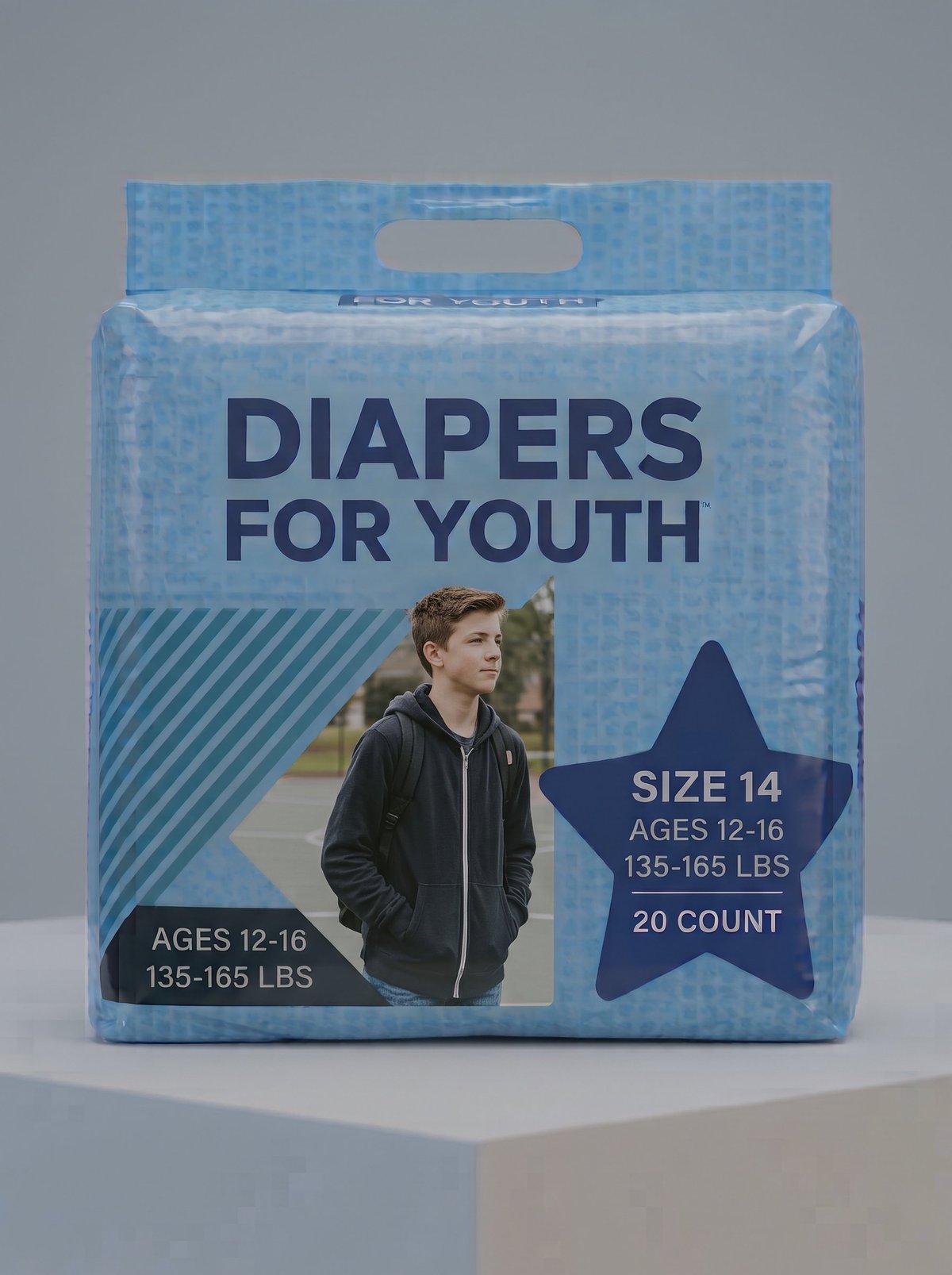
Package of Diapers for Youth, size 14, ages 12 to 16, 135 to 165 lbs, 20 count

55 to 165

lbs covered

6 to 16

ages covered

How we got here

Six decisions that shaped the line.

  1. 01

    The problem

    The shelf runs out where it starts to matter

    Standard diaper ranges climb through toddler sizes and then simply stop. For the older child who still needs protection, the last size on the shelf is usually a Size 7 or 8 built for a two year old's body, and beyond that, the choice is an adult product scaled for a grown man, or a pull up that's designed to look like underwear rather than to hold.

  2. 02

    The pattern

    Parents were already improvising

    In forums, in group chats and in retail aisles, families were solving it privately: using adult smalls and folding the waist down, layering two products overnight, taping a pull up that had split at the side, or driving further to a medical supply store for something that looked clinical. None of that is a product decision, it's a workaround.

  3. 03

    The insight

    Pull ups trade absorbency for appearance

    Pull ups exist to look and feel like underwear, and they're good at that. But that construction puts seams and elastic at the legs, which is exactly where leaks start. Cloth like pull ups in particular tend to wick and gap, especially at night and when a child sits, runs or sleeps in them. When we asked parents what kept failing, leak complaints around pull ups came up again and again.

  4. 04

    The decision

    A tab diaper, built for bigger bodies

    A traditional tab diaper with a proper youth size solves both halves of the problem: the absorbency and resecurable fit of a real diaper, in a size that actually matches a 9 or 13 year old's body. It's not the flashiest format. It's the one that holds.

  5. 05

    The refinement

    One tab per side instead of two

    A typical youth diaper puts two tabs on each side, four fastening points in total. We found we could build the same hold with a single, wider tab per side, which makes the diaper more flexible, easier to put on, and much easier to take off. Fewer fastening points also means fewer places for a tab to catch or crease against uncomfortable clothing.

  6. 06

    The finish

    Designed so it doesn't look like a baby product

    A cloth like back that stays quiet under clothing. A star print that carries the size number, so the size is legible at a glance without a cartoon character in sight. A wetness indicator so nobody has to guess. And 20 diapers in every pack, consistently, because planning a trip shouldn't involve three different counts.

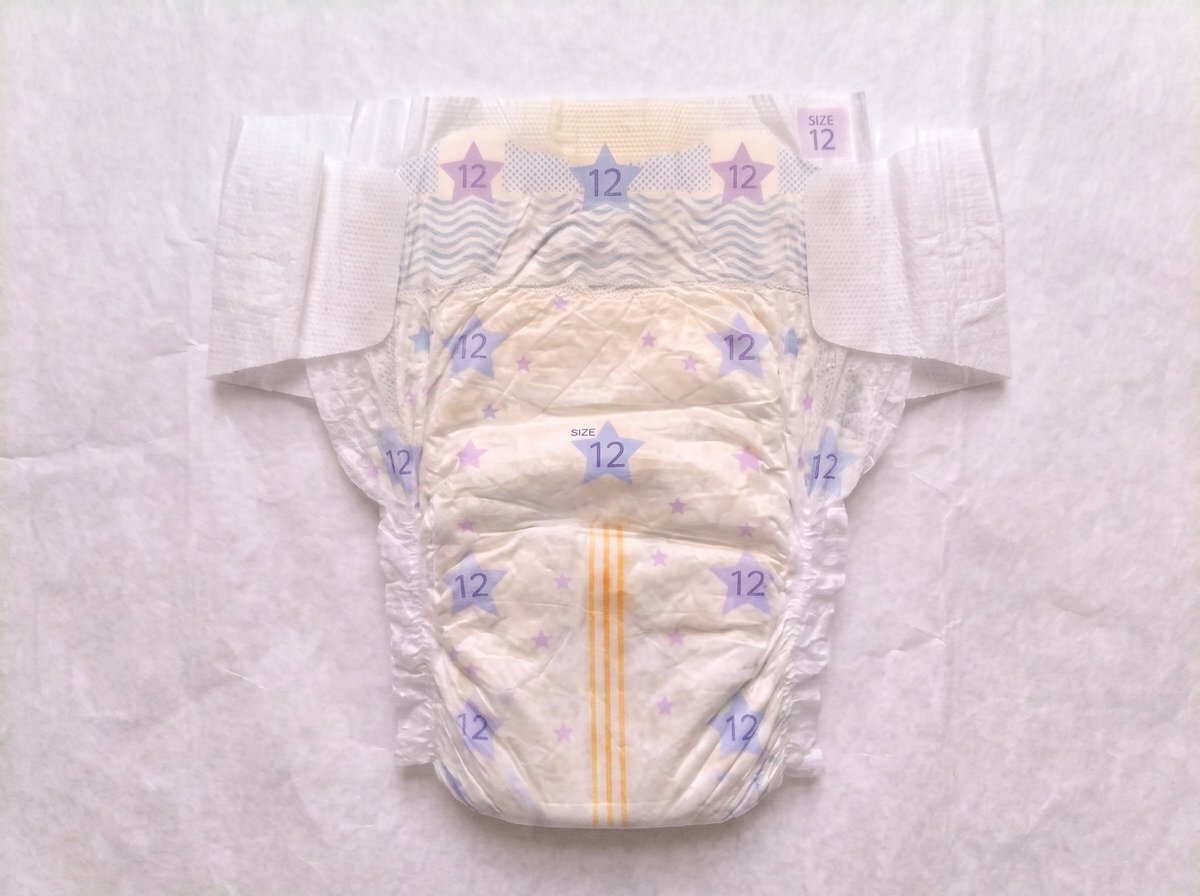
Open Diapers for Youth diaper showing the single tab on each side

The construction

One tab a side. And it holds.

A typical youth diaper carries two tabs on each side, four fastening points. We build ours with a single tab on each side instead. Same hold, noticeably more flexible: the waist can be adjusted without loosening the other side, the diaper is easier for a parent or older child to put on, and it comes off cleanly.

  • More adjustable

    One tab lets the waist flex as the child moves, no tug of war from loosening a second tab.

  • Easier on

    Two fastening points instead of four mean a quicker, less fiddly change.

  • Easier off

    Release the sides instead of pulling down a full diaper, which matters most overnight.

  • Fewer failure points

    Every tab edge is a place a leak can start. Fewer, wider tabs mean fewer edges.

A clear position

We don't make pull ups. Here's why.

Pull ups close with elastic rather than tabs, and that is where most leaks start. We build the weaker tool out of the equation.

Read the full reason

What we're building around.

We make tab diapers, not pull ups

Pull ups have their place, and some families prefer them. But pull ups are prone to leg gaps and leaks, particularly overnight and after long wear, and that's the outcome we're trying to fix. Our whole line uses tab construction with a single tab per side. We have no plans to release a pull up.

Six sizes, real steps between them

A number on a pack means different things in different brands. Ours climb in clear, printed weight bands from 55 lbs to 165 lbs, so moving up a size is a genuine step rather than a guess. Every pack shows the age range, the weight range and the count.

Built for the way kids actually live

Long drives. Theme parks. Sleepovers. Overnight camps. A school day. A child who concentrates better when they're not worrying about the bathroom. The diaper should disappear into all of it, no crinkle, no bulk, no reason for anyone at school to notice.

How we work.

01

Respect

A child who needs a diaper is not a problem to be managed quietly. Every choice, packaging, wording, materials, assumes dignity first.

02

Clarity

Six sizes, printed ages and weights, and honest information about what our product does and doesn't do. No product should require guesswork.

03

Real options

Families shouldn't be left stitching adult products together for a child. A proper youth size should simply exist on a shelf.

04

Quality over convenience

Pull ups are convenient. They also leak. We chose the construction that works better, even when it's less fashionable.

05

Listening

Every answer in the questionnaire is read. Sizing and feature decisions start with the parents living it, not with a focus group.

06

Restraint

One tab per side, not two. One clear line of six sizes, not forty SKUs. We'd rather do a few things properly.

Help us get the size right.

Every waitlist entry runs through a short questionnaire. That's how we choose what we make next.

Join the waitlist