The long line is
the whole problem.
A theme park is the hardest day out there is: heat, two hour queues, water rides, long walks and a drive at both ends. It is also the day where a diaper does the most obvious work. You stay in the line together, you finish the day you planned, and nobody remembers the part that used to go wrong.
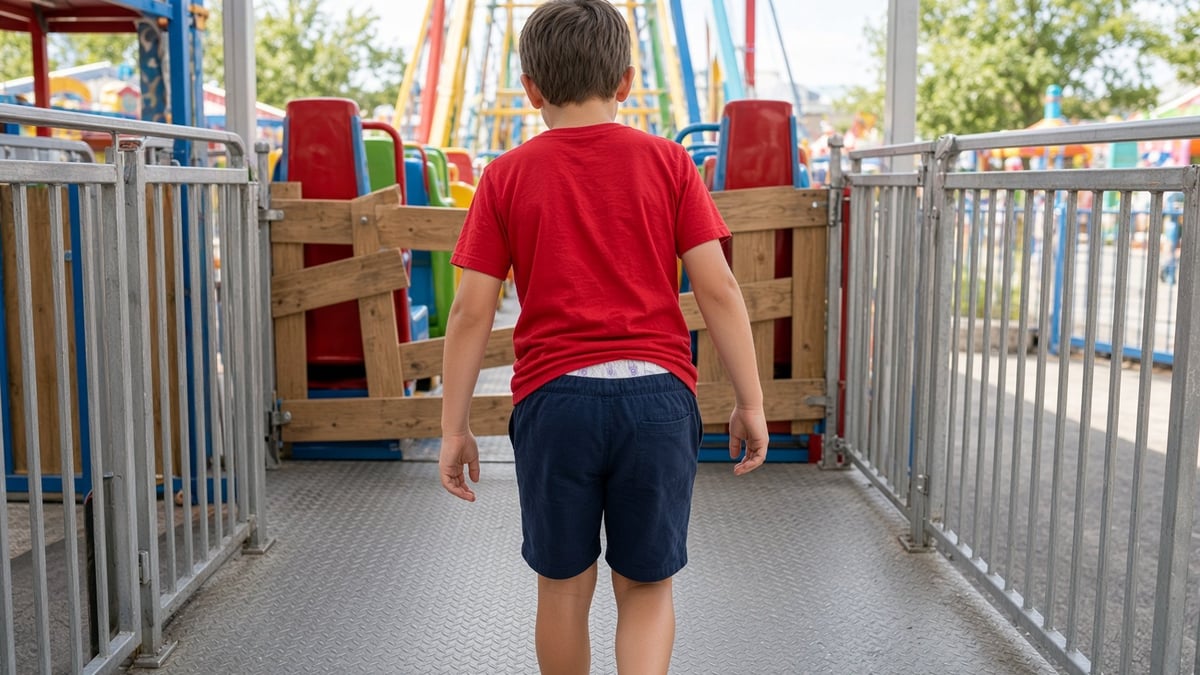
Four days out, one answer.
Theme parks get the most attention, but the same reasoning covers the fair down the road and a stadium on a Saturday. Here is what makes each of them hard, and what changes when a diaper is part of the plan.
Theme parks
Two hour queues, rides that empty at the far end of the park, and a long walk back to the car. A diaper means nobody has to leave the line to hunt for a restroom, and the day keeps its shape.
County fairs and carnivals
Fewer bathrooms, more crowds and a lot of standing. A four hour fair is exactly the kind of day where a boy gets caught out, and where a spare in the bag turns it into nothing.
Water parks
A padded swim product in the water, then back into an ordinary one for the rest of the day. Change before the splash zone rather than after, and keep the dry ones sealed in the bag.
Big days out in the city
Museums, stadiums and festivals have queues too, and their restrooms are not always where you need them. The same kit covers the day whether the plan is a coaster or a concourse.
A practice day at home, first.
If he has never worn one before, the park is the worst place to find that out. A crowded, hot, unfamiliar place is where a boy is least likely to relax and try something new, and the first time is when everything needs adjusting: the fit, how it feels walking, and his own worry about it.
Give him a practice day at home first. Put one on in the morning on an ordinary day, nothing special planned, and let him wear it through the afternoon. No queue, no audience, and a bathroom five steps away if he changes his mind. He gets used to how it feels, the fit gets checked properly, and the first time he uses it happens somewhere private.
When he has had one calm day in one at home, the park is no longer the first time. It is an ordinary day in something he already knows.
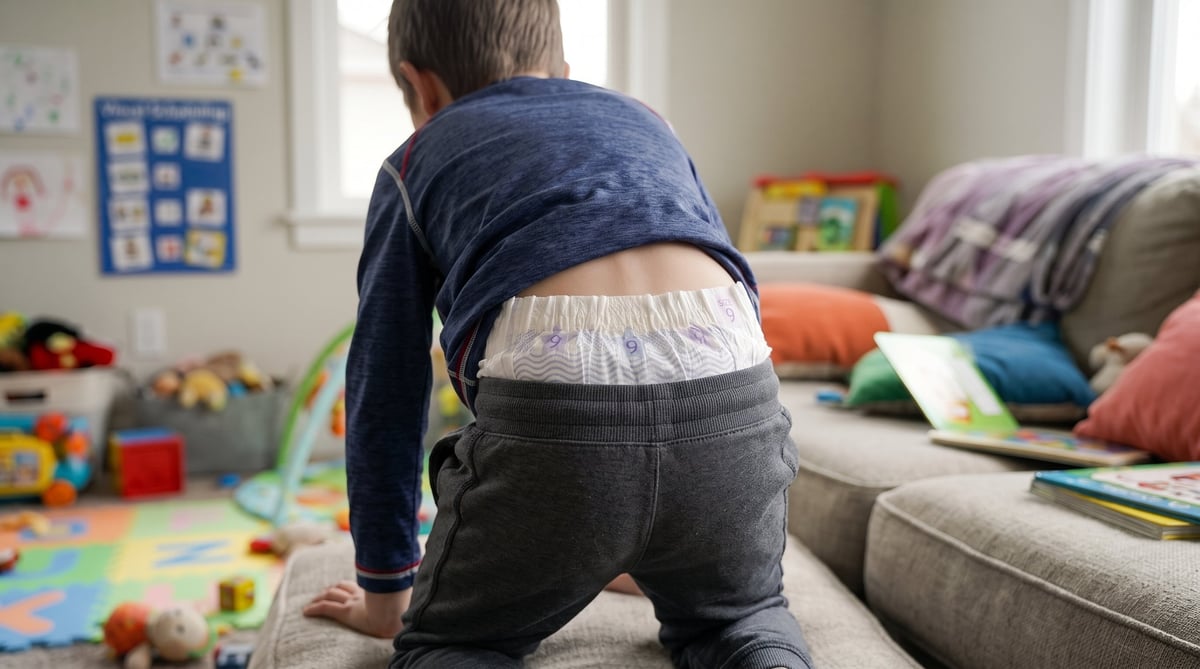
The practice day, in order
- Pick a quiet day at home, one or two days before the trip.
- Put one on after breakfast, so there is a full day ahead.
- Check the fit sitting, standing and walking.
- Tell him plainly that today it is his bathroom.
- Let him use it once at home before he ever has to in public.
- Keep the rest of the day exactly as normal.
From the parking lot to the drive home.
Once he has had his practice day, this is how the park day itself runs. A boy who has worn one before walks through the gate already knowing what the day looks like.
- 01
At home, before you leave
Put it on just before you walk out of the door, with the spare pouch already packed. The drive, the parking, the walk to the gate and the bag check are already an hour before the first ride. A fresh one when you leave means nobody is looking for a restroom on the way in.
- 02
The first long queue is the one to plan around
The headline ride at opening is often the longest wait of the day. This is where the day changes: you all stay in line together instead of one of you walking to the far side of the park and back. It is also the moment to tell him plainly that the diaper is his bathroom today.
- 03
Midday, at the first aid station or family restroom
Big parks plan for this. The first aid station almost always has a private room with a table and a lock, and staff there are used to helping families. The family restroom is the other option, with a bench and a door that locks. A tab diaper opens at the sides, so no shoes come off. Plan the change around lunch, not because something went wrong but because it is the cheapest moment of the day.
- 04
Water rides and splash areas
For splash areas, a padded swim product is the better fit in the water, then back into an ordinary one for the rest of the day. Change into it before the splash zone, and keep the dry ones sealed away.
- 05
One before the drive home
The last change happens at the car or in the restroom by the exit, before the queue out of the lot. Nobody wants to be forty minutes into the drive with the only option being a shoulder stop.
Parks have a room for this. Ask the staff.
Changing an older child on a park bench or a bathroom floor is the part parents dread most, and it is usually unnecessary. The larger parks are set up for it.
- 01
The first aid station
Every major park has one, and every one we have heard about has a private room with a table, a sink and a door that locks. Staff there are used to families and used to this. It is the quietest, most dignified option on the property, and most families never think to ask.
- 02
The family restroom
Most large parks have them near the central dining areas and the entrance. A bench, a lock and room for two people. This is the everyday option for a park day, and it is usually within a few minutes of wherever you are.
- 03
An accessible stall
On a smaller park, a fair or a carnival there may be no first aid station and no family restroom. An accessible stall is the next best thing: a standing change takes about a minute with a tab diaper, and he keeps his shorts on.
- 04
The car, if it comes to that
The back seat with the doors closed, a jacket underneath and a foldable mat. Not comfortable, but private, and always within reach. It is the fallback rather than the plan.
On the way in, ask the staff at the gate where the first aid station is and where the family restrooms are. It takes ten seconds and means nobody is hunting for one at the end of the day.
One pouch, and the day is covered.
Nobody needs a bag that looks like a supply run, but a park day is long and a boy can go through several without anyone thinking about it. Count how many he would normally use across a day this long, that is often three or four once you add heat, long queues and a change at lunch, then pack that number plus two extras. A plain pouch, wipes and a sealable bag is the whole of it, and it still fits in a backpack without anyone asking.
One extra thing worth saying: heat means more to drink, and more to drink means more to go. Don't ration drinks to buy time. Keep the water going and plan the lunch change.
The park day kit
- He wears one out of the house, plus his usual day count plus two extra.
- Wipes and a sealable disposal bag.
- A plain pouch that looks like any other.
- A change of shorts for the bag.
- A padded swim product if there is a splash area.
The ones that come up before a big day.
01Will anyone know he's wearing one?
In loose shorts and a longer shirt, no. That is why the style matters: it is plain and quiet rather than printed like a baby product. On a park day everyone is hot, tired and looking at the queue, not at the back of a boy's shorts.
02Where do we actually change him?
The first aid station is the best option at a large park: it has a private room with a table and a lock, and the staff are used to this. A family restroom is the everyday choice, and an accessible stall works on a smaller site. A tab diaper opens at the sides, so he keeps his shoes and shorts on while it is swapped.
03What about a change in a queue?
You don't need to. Plan one at lunch and one before the drive home. A well fitted one holds through a normal active day; the change is a convenience, not an emergency.
04He is worried someone will see it.
That worry usually loosens once he gets through a queue without leaving it. Tell him the point out loud before you go in: the diaper is his bathroom today, so he doesn't have to look for one. Most boys care far more about not missing something than about what is under their shorts.
05Is it worth it just for one day out?
That is the simplest use of all. Many families keep a diaper as a kit for specific days, use it for the park, and go straight back to ordinary days afterwards. It is not a verdict on his training; it is a tool for a long day.
Give the day back to the rides.
Six sizes by weight, sides that open, and a fit that holds through a long, hot day out.