You've decided.
He's refusing.
The hardest version of this is a boy of ten who is totally against it, and a parent who has decided anyway because the accidents are hurting his week. Both of those things can be true. You do not need his agreement to make a decision about his wellbeing, and he does not need to like it. What follows is how to do it without turning it into a battle night after night.
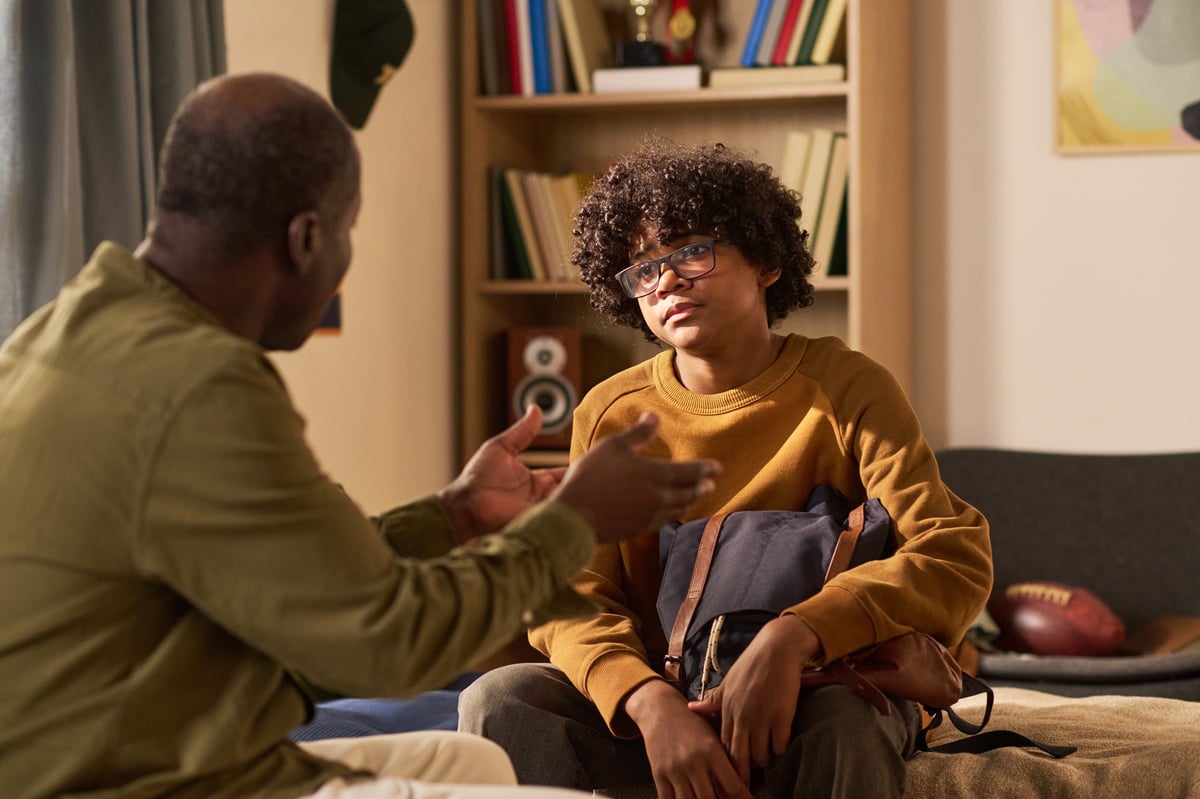
Four things that stop it becoming a fight.
Name the decision before you defend it
Say once, plainly, that this is happening and why. Not a debate, not a negotiation with the boy, and not an apology. 'This is what we're doing, because the accidents are hurting your week. I know you hate it, and that's allowed.' Then stop talking and let him react.
Let the anger happen without treating it as the vote
He may shout, slam a door or refuse to come out. That is a normal reaction to a decision he did not make, and it is not a reason to reverse it. Stay calm, stay brief, and don't argue with the feelings. The decision stands; the feelings are his.
Hand back everything that isn't the decision
Which size. Where the box lives. Whether the door is shut first. Whether he changes himself at night or a parent does. None of it is the core decision, and it is often most of what he actually wants. Give it freely and he has almost nothing left to fight for.
Never win in front of an audience
A fight with siblings in the room, or on the way out of a friend's house, becomes about saving face and he will hold on much harder. Take it private, hold the line, and let the ordinary things continue. What he needs is a quiet adult who is not going to change their mind because he shouted.
Four objections, answered.
He has a small number of things to say, and each of them has a short, honest answer. Say it once, calmly, then stop. Repeated reassurance sounds like doubt.
"I'm too old for these."
You are also too old to be having accidents in a school day, and here we are. This is the age appropriate tool for the age you are. It is sized for your body, not a baby's.
"Everyone will know."
Nobody at school knows you have it on unless you tell them, and it goes under your clothes. The only person who decides who hears about it is you.
"You're punishing me."
It's not a punishment, and you haven't done anything wrong. It's the thing that stops the accidents, and we would rather have the tool than the accidents.
"I won't wear it."
You're allowed to hate it. You're not allowed to skip it, because it's about your body working on a day out, not about whether you agree. Tell me what part you can control and that part is yours.
Six things that turn a protest into a war.
None of these are cruel. All of them make a ten year old more certain that the whole thing is about him being wrong, and that is the version he will fight.
- Reopening the decision every evening.
- Arguing with him about it in front of anyone else.
- Promising it will stop by a date.
- Calling it a baby thing, even as a joke.
- Telling him it's for his own good in a lecture.
- Punishing the refusal rather than just proceeding.
Proceeding quietly, without a punishment and without a debate, is what ends a protest. Most boys stop arguing once they see that arguing changes nothing and nobody is making a spectacle of it.
The ones that come up most.
01Should I force it if he's ten and completely against it?
You put it on, calmly, the same way you would insist on a seatbelt or a coat. There is no physical struggle and no shouting match; a parent fits it, says little, and moves on with the evening. A ten year old cannot manage the fit himself anyway, so this is not a case of making him comply. It is doing the thing and letting him be unhappy about it.
02What if he takes it off in the night?
Some do, in the first few days. Deal with the wet bed quietly in the morning, put another one on the next evening, and don't make it a standoff. If removing it becomes a nightly pattern after a couple of weeks, that is worth a longer conversation about what is underneath the protest, and it may be worth asking whether the size is uncomfortable or something happened.
03Won't he resent me for it?
He may resent the decision for a while. What children remember later is how it was done: whether it was announced with shame, argued about nightly, or handled quietly by an adult who was steady. The steady version is the one that fades.
04Can I agree to a compromise?
Yes, on almost everything except the part that matters. Nights only, for a trial period, for trips, for school days: all of those can be negotiated. Whether it goes on tonight, once you have decided a diaper is the answer, cannot be up for a vote every evening.
05What if his other parent is against it?
Agree between the adults before you involve him, because a child who senses the adults disagreeing will refuse with confidence. Keep the rule the same in both houses, and if you cannot, keep it the same in yours and do not discuss the disagreement in front of him.
06When does a protest become something else?
If he is genuinely distressed, withdrawing, or showing a sudden change in behavior or sleep, that is worth a pediatrician's view. Day to day anger at a decision is not. Most boys move on within a week or two once the routine settles.
General information, not medical advice. If the distress is persistent or comes with a change in behavior or sleep, your pediatrician is the right person to speak to. Related: when he won't use it.
A product he can complain about and still wear.
A quiet cloth back and a fit that does not show is a large part of what ends the objection.