Still in diapers at six or seven.
Should you keep pushing him to train?
He is older than the other kids. Training has been tried, stopped, tried again, and right now nobody is sure whether to push or leave it alone. This page is about that decision: what is actually normal at this age, when pushing helps and when it makes things worse, and what a proper pause looks like if that is what you choose.
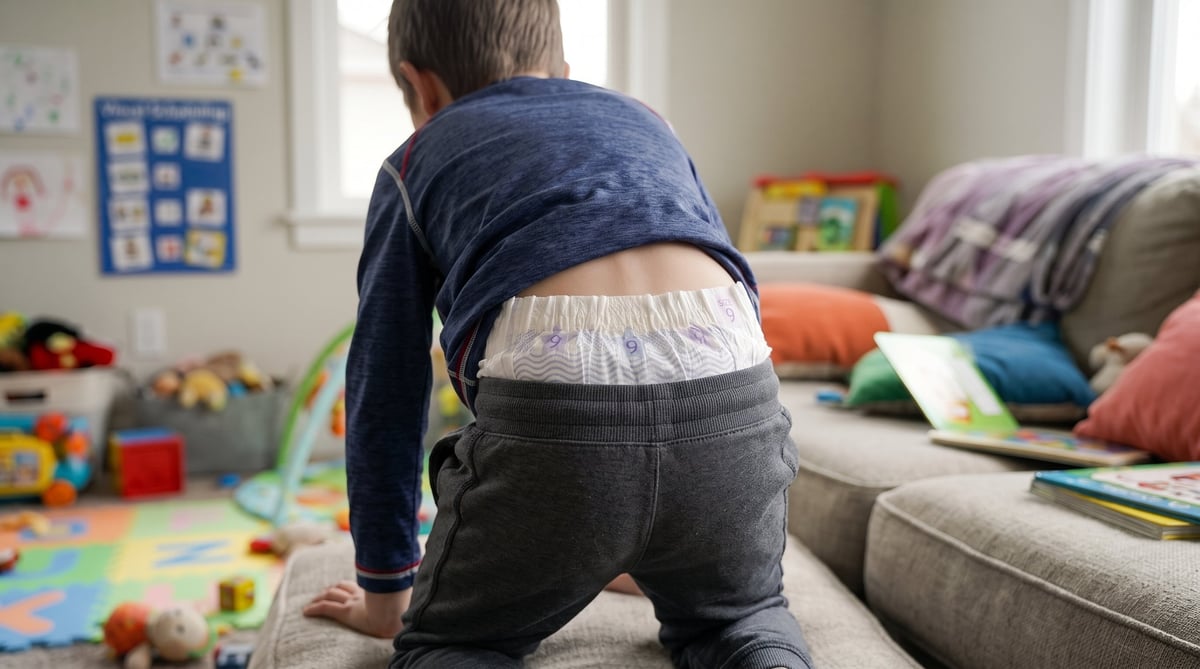
Four things worth hearing before you decide anything.
There is no age by which this has to be done
Dryness arrives on its own schedule, and it is not a sign of effort or intelligence. Some boys are out of diapers at three or four, some are still in them at six, and some at ten. All of those sit within the ordinary range. Nobody is keeping score except the shelf in the supermarket, which stops offering a size that fits.
Going back doesn't undo anything
A stretch in diapers does not set training back, and it is not a step he has to earn his way out of again. What actually slows a child down is being pushed through a refusal, because then the bathroom becomes a battleground rather than an ordinary part of the day.
Pausing is a decision, not a surrender
Choosing a diaper for a season so that he can sleep, go to school, or get through a long day without an accident is a care decision. It is the same kind of decision as any other practical thing a parent does for a child who needs extra support for a while.
He can tell when you are worried
Boys read their parents. If every wet morning comes with a sigh, he learns there is something wrong with him before he has the words to argue with it. Handling it as a small, ordinary fact is the single most useful thing you can do for his confidence.
Push, pause, or ask someone.
These are not three stages. They are three different situations, and the one you are in decides what happens next.
Worth working on
He is willing and can tell when he needs to go. He has had dry stretches before. The pattern changed recently, after a big move, illness or disruption. There is no school pressure and no shame involved.
Worth pausing
It is daily conflict. He is anxious or upset about it. He is holding on and causing himself discomfort. It has been going on for months without change. He is going through something else, and this is not the thing to add to it.
Worth asking about
It is new and sudden after years of being dry. There is pain, straining, or a change in bowel habits. He is tired, thirsty or not growing as expected. That is a conversation with your paediatrician, not a training question.
None of this is a medical assessment, and a paediatrician is the right person to ask if a pattern is new, painful or changing.
A pause has to actually be a pause.
A break only helps if it is a break. If you step back from training but keep checking, keep asking, and wince at a wet morning, he has not been given any rest, and nothing changes.
In practice: decide the answer for the season, say it once, and make it ordinary. He uses a diaper when he needs it, you change him without comment, and nobody brings it up at dinner. Come back to training when something has changed, either his willingness or the situation around him.
If a product makes that pause easier to live with, use one. It should not be something anyone has to be brave about.
One sentence to keep ready
“We are not going to keep fighting about this. You can wear it for now, and when you want to try again, we will.”
Then drop it. The line is doing its job the moment it stops being the topic.
The ones nobody says out loud.
01He is six or seven and still in diapers. Is that late?
It is later than most children, and it is not unusual, and the two things are true at once. There is no deadline. Dryness at this age is a developmental and sometimes medical question, and it arrives when it arrives. Being in a diaper at six does not mean he will still be at twelve, and it does not mean anything has gone wrong with him or with your parenting.
02Did going back to diapers set him back?
No. Diapers are a tool that lets him get through the day and the night without accidents, and a child who is dry and comfortable is in a better place to learn than one who is wet, embarrassed and being pushed. What sets children back is pressure, not a product.
03Should we keep trying, or wait?
If he is willing and can feel when he needs to go, it is worth working on. If it has become a daily fight, or he is upset and holding on, that is the time to pause and come back to it later. Neither choice is permanent.
04How do we tell him we are taking a break?
Plainly, and without drama: "We are not going to keep fighting about it. You can wear this for now, and when you want to try again, we will." One sentence, then drop it. He will remember the tone far longer than the words.
05Will other parents think we gave up?
Some might have an opinion, and none of them are living your week. You do not owe anyone an explanation, and your son does not need to hear you give one. A calm, decided parent is easier for him to trust than one who keeps apologising for a decision they have made.
06What if he asks to stop wearing them?
Then that is worth listening to, and worth trying. Tell him you will give it a proper go, agree what will happen if it goes well and what happens if it does not, and let him lead. A decision he made is far more likely to last than one made for him.
General information, not medical advice. Anything that is new, painful or changing is worth a conversation with your paediatrician. Related: how long this usually lasts and going back after toilet training.
Nothing has gone wrong.
He is doing what a lot of boys his age are doing, and you are doing what a parent does: getting through the week and keeping him comfortable while you wait for his body to catch up.
Product information, not pressure: nothing here says you have to keep him in them.